

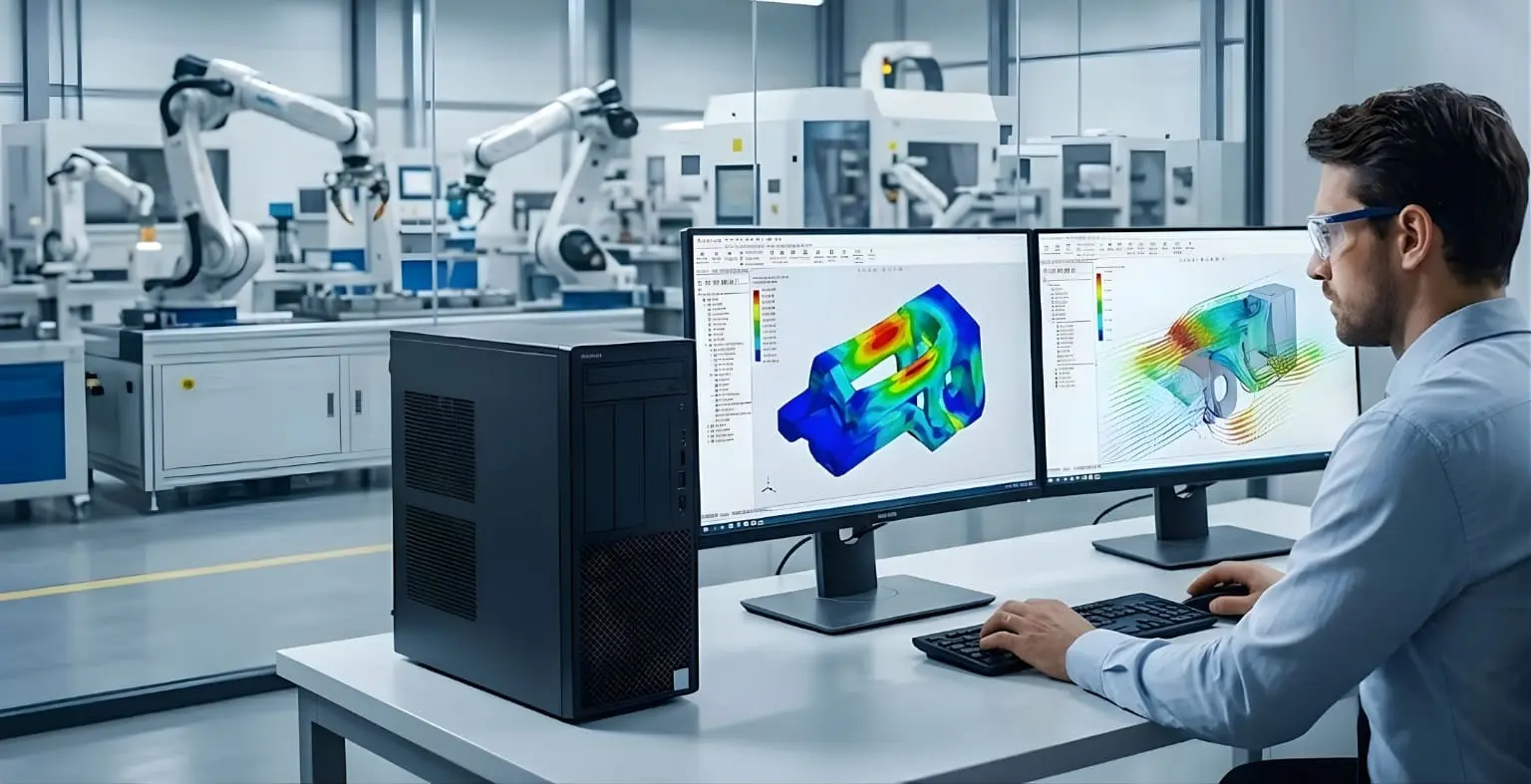
Engineering simulation software is the primary driver of high-tech production in 2026. It allows teams to predict how products behave in the real world before they even exist. In a competitive landscape, the ability to iterate quickly is a massive advantage. Manufacturers no longer rely on guesswork. Instead, they use data-driven insights to refine every bolt, weld, and circuit.
At Creotek India, we help businesses transition from traditional methods to digital-first workflows. This shift is not just about adopting new software. It is about changing the culture of design. When you simulate early, you succeed faster.
Engineering Simulation Software: Transforming Modern Shop Floors
Digital testing tools have reached a critical point in their adoption. Industry reports indicate that the global simulation market is growing at an annual rate of 12.5%. This growth is driven by the need for extreme precision in sectors such as aerospace, automotive, and renewable energy.
Drastic Reduction in Development Cycles
Speed is the most valuable currency in modern manufacturing. Traditional workflows often stall during the prototyping phase. Engineering simulation software removes these bottlenecks.
By testing designs virtually, engineers can run hundreds of “what-if” scenarios in hours. This replaces the weeks spent waiting for physical parts to arrive. Data shows that companies using these tools see a 30% reduction in total development time. This allows products to reach the market while the demand is still at its peak.
Slashing Prototyping and Material Costs
Physical prototypes are expensive. They require raw materials, specialized labour, and machine time. If a prototype fails, the investment is lost. Simulation changes this dynamic entirely.
- Failure Analysis: Identify weak points in a digital environment where the cost of failure is zero.
- Material Optimization: Use exactly the amount of material needed without compromising safety.
- Waste Reduction: Minimize the scrap metal and plastic generated during the testing phase.
Studies confirm that virtual testing can reduce the number of physical prototypes by up to 50%. For a mid-sized manufacturer, this translates into millions of rupees in annual R&D savings.
Ensuring Higher Product Reliability
Reliability is the foundation of brand trust. In the past, hidden flaws often went unnoticed until a product reached the consumer. This led to costly recalls and damaged reputations.
Simulation allows for “stress testing” beyond what is possible in a physical lab. You can simulate years of wear and tear in just a few minutes. Whether it is thermal fatigue in electronics or vibration in heavy machinery, simulation identifies these issues early.
Supporting Sustainability Goals
In 2026, sustainability is a business requirement. Governments and consumers demand greener products. Simulation helps engineers design for a circular economy.
You can simulate how a product can be disassembled for recycling. You can also test alternative, eco-friendly materials to see if they match the strength of traditional plastics or alloys. This ensures that your “green” initiatives do not lead to “weak” products.
Technical Advantages of Modern Simulation Tools
The capabilities of these tools have expanded significantly. They are no longer just for structural checks. They now cover every physical phenomenon.
Multiphysics Analysis
Products today are complex. A smartphone has to handle heat, electricity, and physical drops simultaneously. Multiphysics simulation allows you to test these interacting forces simultaneously. This holistic view prevents “siloed” engineering errors where a fix for one problem creates a new one elsewhere.
Computational Fluid Dynamics (CFD)
CFD is essential for anything involving air or liquid flow. This includes cooling systems for EV batteries or the aerodynamics of a drone. By optimizing flow virtually, manufacturers can improve energy efficiency by up to 15%.
Generative Design Integration
When combined with AI, simulation leads to generative design. You input your constraints, like weight and strength, and the software “grows” the most efficient shape. These designs are often lighter and stronger than anything a human could draw manually.
Why Partner with Creotek India?
Implementing engineering simulation software requires more than just an installation. It requires a partner who understands the Indian manufacturing ecosystem. At Creotek India, we provide localized support and technical training to make these tools effective.
We work with industry leaders such as PTC and Hexagon to deliver best-in-class solutions. Our goal is to ensure your team isn’t just using software but gaining a competitive edge. From initial setup to advanced workflow optimization, we are with you at every step.
Future-Proofing Your Business
The gap between companies that use simulation and those that don’t is widening. As 2026 progresses, manual testing will become a relic of the past. Investing in simulation today ensures your business remains relevant in an automated, digital future.