

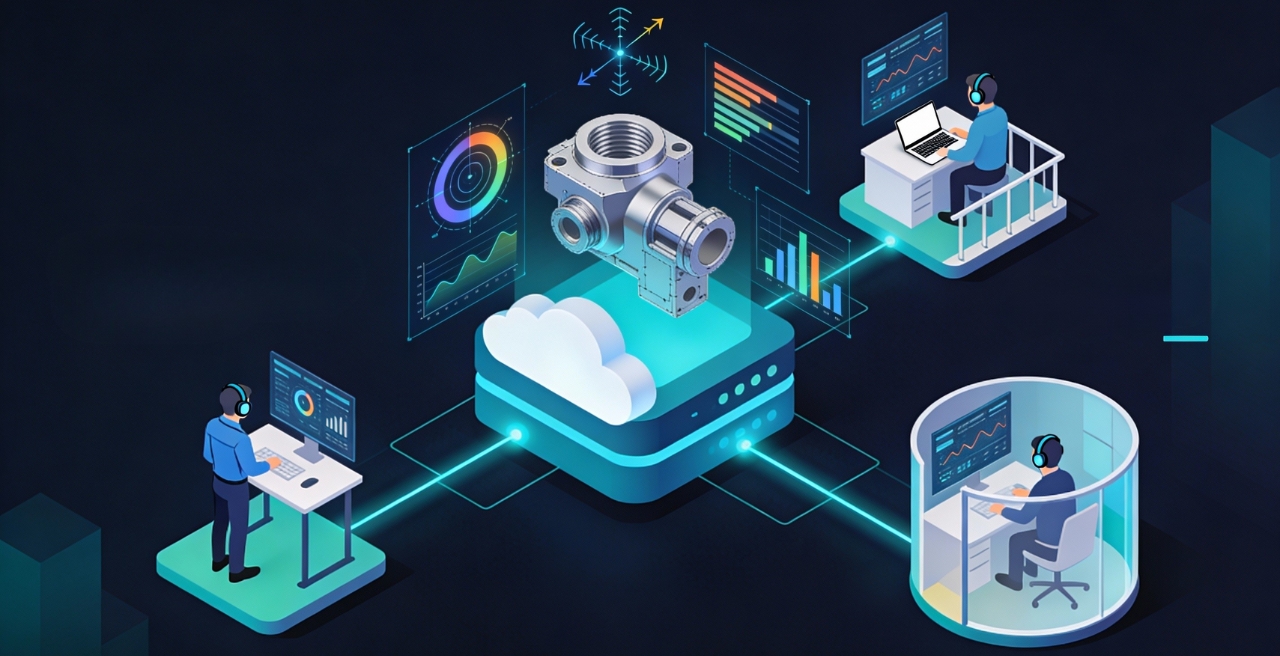
Cloud-based simulation tools are transforming how engineers collaborate, review their designs, and develop new ideas in remote settings. As more design teams work from different locations, older on-premise simulation systems can slow things down and cause problems.
Working together on engineering projects remotely can be difficult due to limited hardware, disconnected workflows, and slow simulation times. Cloud simulation helps by providing shared data, scalable computing power, and real-time insights.
Cloud-Based Simulation Tools: A New Foundation for Remote Engineering
Cloud-Based Simulation Tools let engineers run advanced simulations on secure cloud platforms instead of on their own computers. These tools can perform FEA, CFD, and multiphysics analysis with substantial computing power.
Cloud-based CAE solutions centralize models and results, ensuring all team members access the same data regardless of location, unlike on-premises systems.
Key advantages include:
- Browser-based or lightweight access
- Centralized simulation data
- Seamless integration with CAD and PLM systems
This foundation enables teams to collaborate more effectively and adapt to design changes more quickly.
Key Challenges Faced by Remote Design Teams
Remote engineering teams often face operational and technical problems that can delay new product development.
Common challenges include:
- Limited access to high-performance simulation hardware
- Disconnected CAD and CAE workflows
- Difficulty managing model versions
- Long simulation run times
- Concerns around data security
Without cloud simulation, these problems can slow down engineers and reduce productivity.
How Cloud Simulation Enables Seamless Collaboration
Cloud simulation enables teams to work on shared models in real-time, eliminating geographical barriers. Engineers, analysts, and decision-makers can all see the same simulation data simultaneously.
This improves collaboration by enabling:
- Faster feedback between design and analysis teams
- Real-time sharing of simulation results
- Secure, role-based access for distributed users
- Better alignment across engineering functions
Cloud-based simulation tools help engineers collaborate more easily and reliably, even when they are in different locations.
Scalability and Performance Without Infrastructure Constraints
Cloud-based CAE solutions remove the need for expensive on-site equipment. Engineers can also scale computing power up or down to fit each project.
With cloud simulation tools, teams can:
- Easily run complex FEA and CFD simulations whenever you need them
- Test several design scenarios at the same time
- Keep your projects moving, even during busy times, without hardware slowdowns
- Lower your costs with flexible usage options
This scalability supports simulation-driven design in the cloud.
Faster Decision-Making Through Real-Time Insights
Cloud simulation platforms provide instant results and visualizations. This helps engineers spot issues early and make design improvements faster.
Real-time insights help teams:
- Identify performance issues early in the design process
- Reduce the need for physical prototypes
- Get design approvals faster
- Improve product reliability and quality
Remote design teams working with tight deadlines need to deliver work quickly.
Best Practices for Engineers Adopting Cloud-Based Simulation
To successfully use cloud-based simulation tools, it helps to follow a clear and organized plan.
Recommended best practices include:
- Select tools that work well with your current CAD and PLM systems.
- Set up strong data security and clear access controls.
- Train your teams to use cloud-based workflows.
- Begin with pilot projects before rolling out more widely.
- Create standard processes to support remote teamwork.
These steps ensure smooth adoption and long-term value.
Conclusion
Cloud-based simulation tools enhance collaboration, improve simulation performance, and enable faster, data-driven decision-making. They address infrastructure challenges and streamline workflows for remote design teams.
Cloud simulation in product design enables companies to generate new ideas, accelerate development cycles, and establish engineering processes suited for a distributed future.