

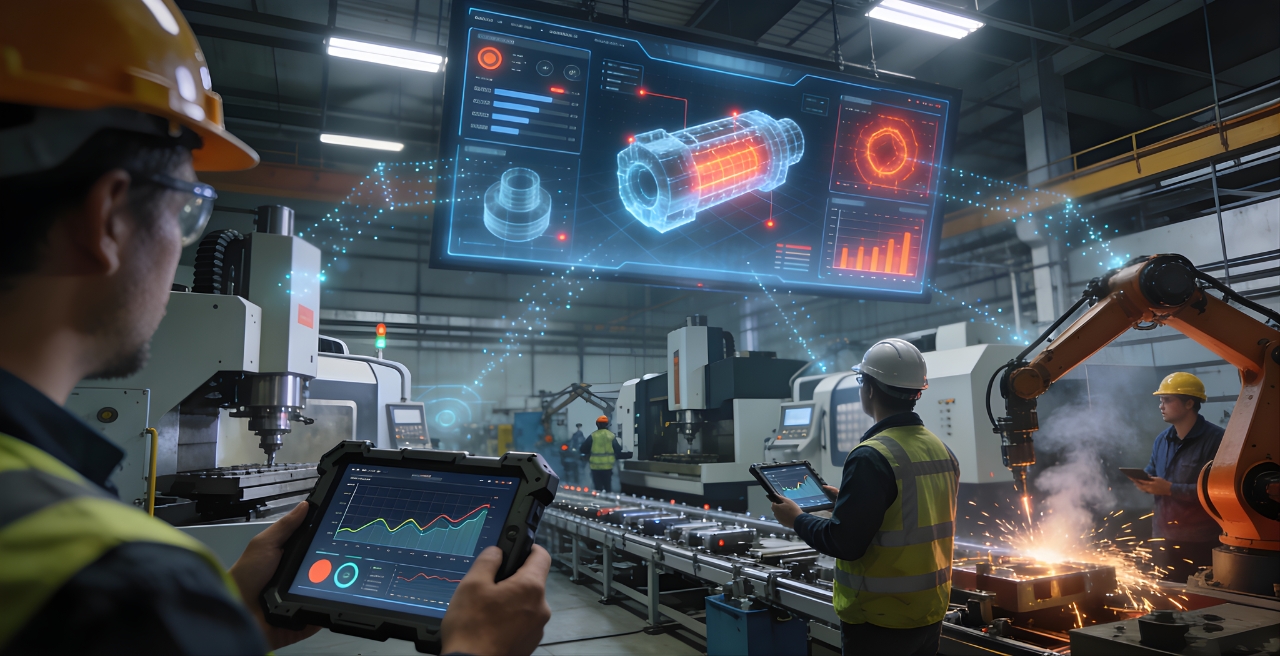
PTC ThingWorx is changing the way products are designed, built, and maintained by adding IoT intelligence to every stage of the product lifecycle.
More and more businesses are moving to connected, data-driven operations, so it’s now essential to incorporate IoT into product design. It helps make things more reliable, reduce downtime, and support predictive maintenance.
In the past, maintenance decisions happened only after something broke. Now, connected products continuously send data, helping engineers spot problems before they affect performance. This move to predictive maintenance begins at the design stage, not just on the shop floor.
PTC ThingWorx and Predictive Maintenance
Predictive maintenance uses both current and historical data to predict when equipment will break down and plan maintenance. Instead of relying on set service intervals, businesses can make decisions based on the product’s actual condition.
ThingWorx is an Industrial IoT platform that links real-world objects to digital systems. Companies can monitor the health of their products throughout their lifecycle by collecting, analyzing, and visualizing operational data.
This ability enables maintenance strategies to shift from reactive responses to proactive, data-driven actions.
Why Predictive Maintenance Starts at the Design Stage
When designing a product, IoT factors must be considered to fully realize predictive maintenance. When engineers think about how to connect things early on, the products become smarter, easier to see, and easier to maintain.
Designing with IoT in mind allows organizations to:
- Integrate sensors and data points into critical components.
- Ensure data flows smoothly throughout the entire digital product lifecycle.
- Identify possible ways the product could fail in real-world situations.
This approach leads to products that work well and keep users informed at all times.
Role of IoT Data in Smarter Product Design
Connected products provide us with useful information that helps us make future design choices. Operational data shows how people really use products, not just how they were meant to be used.
Key data-driven benefits include:
- Identifying performance bottlenecks under real-world conditions.
- Validating design assumptions with actual usage patterns.
- Improving component durability and reliability over time.
When engineering teams connect product use with design, they can keep improving and avoid costly redesigns.
How ThingWorx Enables Predictive Maintenance
ThingWorx offers tools for predictive maintenance across many industries, enabling current engineering workflows to continue as usual.
Core functionalities include:
- Monitor connected assets in real time.
- Analytics-driven alerts for early issue detection.
- View interactive dashboards that display machine health and trends.
- Integrate with PLM and CAD systems to see the full product lifecycle.
With these features, teams can spot problems early, identify their causes and fix issues before they lead to failures. This helps keep systems running longer and lowers maintenance expenses.
Benefits for Engineering and Manufacturing Teams
IoT-powered predictive maintenance helps many parts of a company, not only the maintenance department.
Engineering and manufacturing teams benefit through:
- Faster identification of design weaknesses.
- Help design, production, and service teams work together better.
- Data-driven decisions instead of assumptions.
When product performance data is accessible across teams, organizations can more effectively align design intent with operational reality.
Use Cases Across Industrial Sectors
IoT-enabled predictive maintenance can be used in many industries that depend on reliable equipment.
Common use cases include:
- Automotive components and assemblies.
- Machinery used for industrial production.
- Large equipment and capital goods for industry.
- Environments that use smart manufacturing technologies.
In all cases, connected data supports better maintenance planning and longer product lifecycles.
Conclusion
Integrating IoT into product design fundamentally changes how organizations approach maintenance and reliability.
Predictive maintenance is no longer an afterthought but a design-driven capability that improves performance across the product lifecycle.
When companies use connected product data, engineering teams can create smarter products, manufacturers can reduce downtime, and organizations can move closer to intelligent operations.
As more businesses adopt IoT, predictive maintenance will continue to give them a competitive edge in product development.